Skip to content
Step 1: Measure the Ceiling Area
- Measure length × width of the room.
- Mark where the ceiling level will be.
- Make sure the ceiling height is uniform.
Step 2: Prepare the Framework Layout
- Mark positions for:
- Wall angles / perimeter channels
- Main channels
- Furring channels (cross sections)
- Standard spacing:
- Main channels: 3–4 ft apart
- Furring channels: 1.5–2 ft apart
Step 3: Install Wall Angles / Perimeter Channel
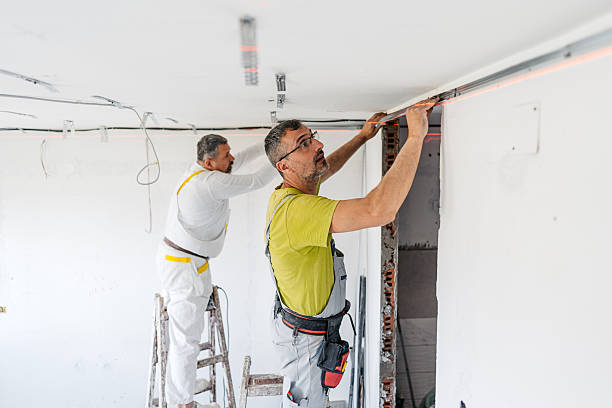
- Fix wall angles along all walls at the marked level.
- Use wall plugs + screws for strong grip.
- Make sure angles are straight using a laser level or water level.
Step 4: Install Ceiling Suspension System
- Fix ceiling hangers or suspension rods from the roof/ceiling slab.
- Hanger spacing: 3–4 ft.
- Attach main channels to these hangers.
Step 5: Fix Furring Channels
- Connect furring channels (cross channels) to the main channels using clips.
- This creates a strong grid frame to support gypsum sheets.
- Check frame level before installing boards.
Step 6: Install Gypsum Boards
- Lift and place gypsum boards onto the frame.
- Keep board joints staggered for strength.
- Screw spacing:
- Every 12–16 inches on channels
- Keep a 3–5 mm gap between sheets for joint compound.
Step 7: Cut Openings (Lights, AC vents)
- Mark and cut holes for:
- Spotlights
- Ceiling AC diffusers
- Fans
- Use a utility cutter or saw.
Step 8: Apply Joint Tape & Compound
- Apply paper tape or mesh tape on all joints.
- Use joint compound (filler) to cover:
- Joints
- Screw heads
- Corners
- Allow to dry, then apply 2–3 coats for a smooth finish.
Step 9: Sanding
- After drying, sand the surface lightly to make it fully smooth.
- Remove dust with a brush.
Step 10: Final Finishing
- Apply primer.
- Then apply paint or wallpaper as required.
- Install lights after final finishing.
Quick Summary
- Frame Ready → Boards Installed → Joints Finished → Paint
Simple flow: Measure → Frame → Fix Boards → Finishing → Lights.
Download Pdf